eXtensible Data Format (XDF) Homepage
|
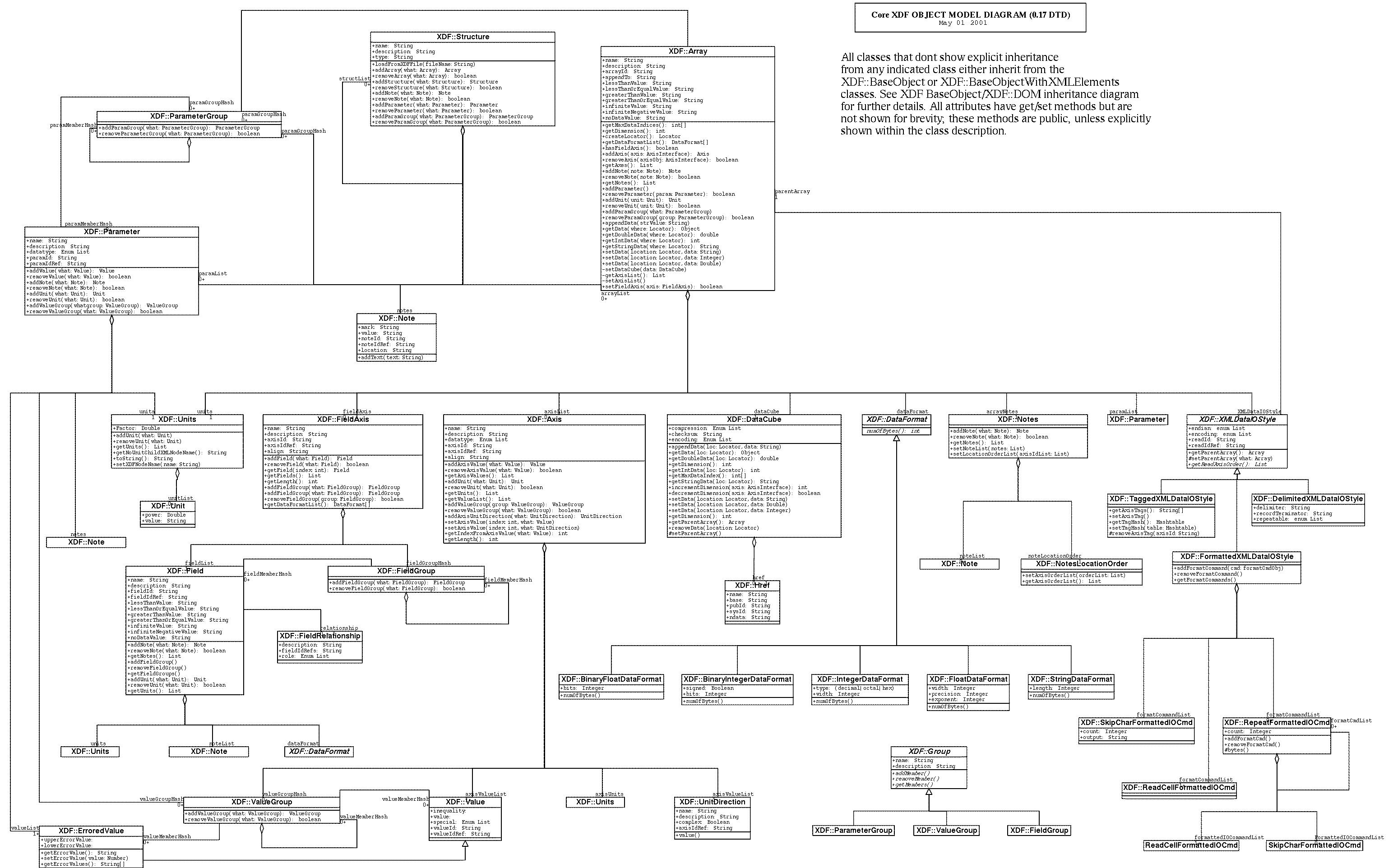
XDF is a common scientific data format based on XML and general mathematical principles that can be used throughout the scientific disciplines. It includes these key features: hierarchical data structures, any dimensional arrays merged with coordinate information, high dimensional tables merged with field information, variable resolution, easy wrapping of existing data, user specified coordinate systems, searchable ASCII meta-data, and extensibility to new features/data formats. Currently the XDF project supports 2 versions of XDF: a "stable" and "development" version. These versions are defined in their various DTDs with version XDF_017.dtd ("017") being the stable, older type of XDF and version XDF_018.dtd ("018") being our development standard. What this means is that few, if any, revisions occur in the 017 standard while 018 is currently undergoing significant and active "re-vision". We support both the stable and development versions in Java and Perl packages. XDF News
XDF Resources General XDF Documentation and SamplesXDF SoftwareTalks and poster presentations that involve XDFFITSML a Markup Languages that Inherit from XDF |
 (FITSML) is an XML/XDF language rendition of the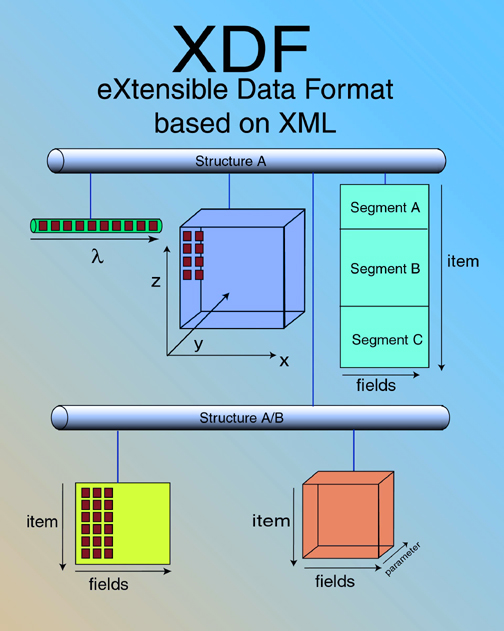


The members of the XML Group, Code 630.1 or NASA are not responsible for the content of any linked material outside of the nasa.gov domain
|
Authors:
Ed J. Shaya
and
Brian Thomas
Last Revised: 10/08/2003 21:46:35 |

|